The Most Expensive Club Renovation Is the One You Have to Do Twice
How Smarter Capital Planning Can Extend the Life of a Club, Strengthen the Member Experience and Make Every Investment Work Harder
At this year’s Golf Inc. Summit, Pembrooke & Ives CEO Dereck Hough was invited to join the panel Sustainable Capital Planning: Investing for Returns, a conversation examining how club owners and operators can make smarter decisions about where, when and how they invest.
The premise was straightforward: sustainable capital planning is not simply about spending less. It is about making the money you do spend work harder.
For private clubs, that requires expanding the definition of return.
Revenue and asset value matter, but so do member utilization, operational efficiency, adaptability and longevity. A capital investment that remains relevant for twenty years delivers a very different return than one requiring reconsideration five years after completion.
In other words, return is not only what an investment earns. It is also what that investment prevents you from having to spend again.
Start by Separating What is Required from What is Desired
Before discussing design, club leadership must understand why capital is being deployed in the first place.
Some investment is required: deferred maintenance, asset protection, safety, infrastructure and operational necessity. Other investment is desired: an elevated member experience, new programming, improved amenities or a stronger competitive position.
Both can be worthwhile. They simply solve different problems.
The mistake is allowing a capital plan to become a collection of projects without first establishing what each investment is intended to accomplish.
For desired capital in particular, understanding the club’s positioning becomes critical. Who are the members today? Who does the club hope to attract tomorrow? How are members spending their time on property? How large are their families? Which areas are heavily used, and which are routinely bypassed?
The answers begin to reveal where design investment can create meaningful value.
Design Around Behavior, Not Assumptions
Private clubs are evolving beyond a collection of singular-use amenities.
Members may arrive for golf or racquets but stay for lunch, work remotely for an hour, meet friends, use the spa and have dinner with their family. Wellness environments increasingly function socially. Lounges become workplaces between activities. Indoor and outdoor environments flow together. Rooms designed for everyday use may need to transform for events.
The lines between recreation, hospitality, wellness, work and social life are increasingly blurred.
That changes the design brief.
At Pembrooke & Ives, nearly four decades of designing private residential interiors have shaped our understanding of how people live, entertain and gather. That experience is particularly valuable in club design because the questions are remarkably similar: How do people actually live here? Where do they naturally gather? What makes them linger? What becomes part of their routine?
A club, at its best, can operate as an extension of home.
Good design therefore cannot be measured only by how a property looks when it opens. It should be measured by what happens there afterward.
Engagement. Dwell time. Connection.
Are members using the amenities? Are they staying longer? Are they connecting with one another? Are these environments becoming part of their routines?
Utilization is a form of return.
Plan for the Member You Do Not Have Yet
One of the most important ideas raised during the Summit was that capital planning cannot focus exclusively on today’s membership.
Clubs are simultaneously serving their current members and positioning themselves for the next generation.
That does not mean chasing whatever amenity happens to be trending. It means understanding how expectations are changing and building enough flexibility into the club to evolve with them.
A floor plan should work on an ordinary Tuesday and during a major club event. A wellness environment should anticipate the increasingly social nature of recovery. A lounge should accommodate uses that may not have existed when the previous clubhouse was conceived.
Sometimes the most valuable square footage is not a new room at all. It is an existing area capable of serving multiple purposes exceptionally well.
This is where thoughtful planning at the beginning of a project becomes disproportionately valuable.
A club can react to current demand, complete a renovation and discover almost immediately that utilization has surpassed what the new program was designed to accommodate. The problem is not increased utilization. It is that the investment was planned around a snapshot of the club rather than its trajectory.
The better question is not simply, What do our members need today?
It is, What are we building toward?
Longevity is ROI
Capital should not chase trends.
There is a meaningful financial difference between an interior that feels current when it opens and one that remains relevant decades later.
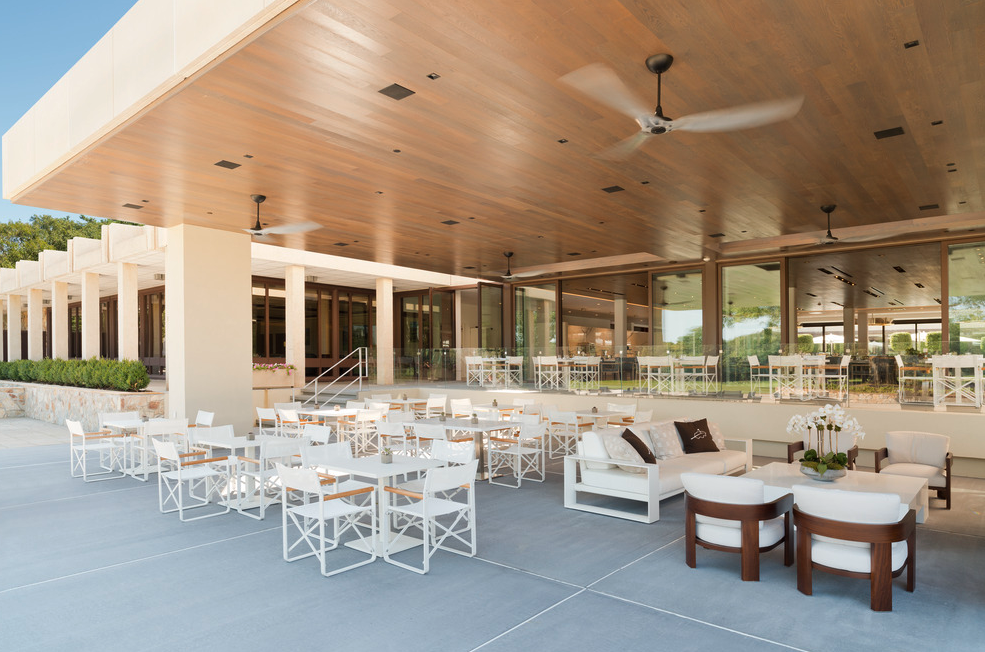
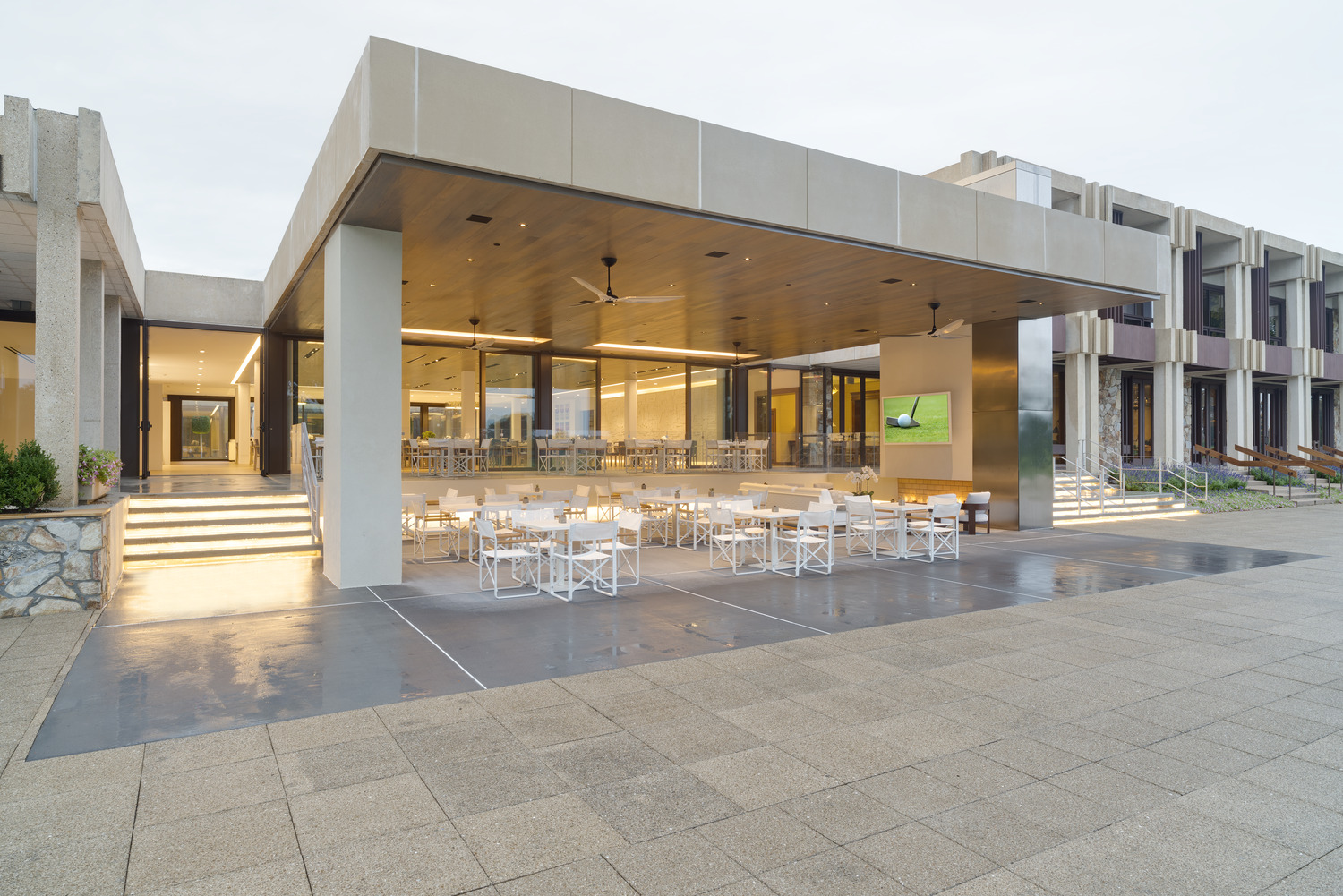
Nearly twenty years ago, Pembrooke & Ives designed East Hampton Golf Club, an 18,000-square-foot clubhouse built from the ground up. Today, the property remains relevant and beautifully maintained, without requiring the kind of comprehensive aesthetic reinvention many clubs face much sooner.
That endurance reflects both the original design and the club’s exceptional stewardship of the property.
The project was conceived to balance the traditional architectural character of East Hampton with a more contemporary design perspective. Rather than impose a particular aesthetic moment onto the property, the team created an environment that could appeal to members with different sensibilities while remaining distinctly connected to its setting.
The result offers a compelling argument for viewing timelessness as more than an aesthetic ambition.
It is a capital strategy.
If thoughtful design and continued maintenance can extend the useful life of a clubhouse from five or ten years toward twenty, a club may defer an entire cycle of significant capital spending. That is a meaningful return, even if it never appears as a line item called “design ROI.”
We explore the East Hampton Golf Club project and the decisions behind its longevity in the next article in this series: Twenty Years Later, East Hampton Golf Club Still Makes the Case for Timeless Design.
Make Every Capital Dollar Work Harder
The most successful club projects begin long before finishes are selected.
They begin with understanding the asset, the membership, the desired membership, the operational realities of the property and the experience the club is ultimately trying to create.
Then design gives those decisions physical form.
As Dereck emphasized during the Golf Inc. Summit, good design is downstream of good decisions.
The objective is not simply to complete the next renovation.
It is to make the next investment last.

ABOUT THE AUTHOR
Dereck Hough, Pembrooke & Ives’ CEO, brings more than a decade of experience in entrepreneurship and real estate development along with a deep appreciation for how thoughtful design can shape the way people feel. Building on a career that began with founding a vertically integrated development firm throughout the Mid-Atlantic, he now guides Pembrooke & Ives from its founder-led roots into its next chapter as a multigenerational design practice defined by elegance, curation, and uncompromising integrity.