Behind the Curtain: An Interview with the Designers of the Hudson Collection
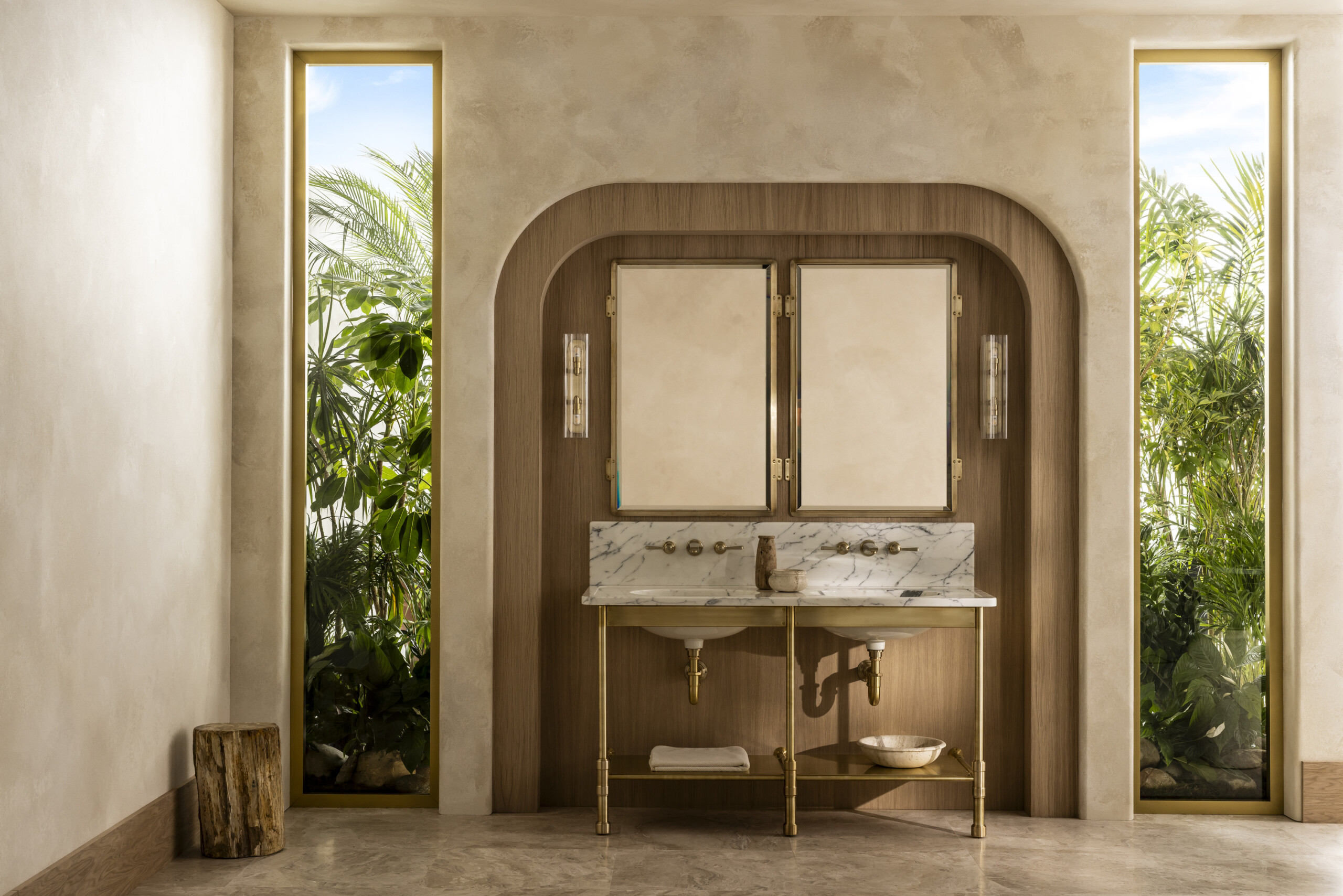
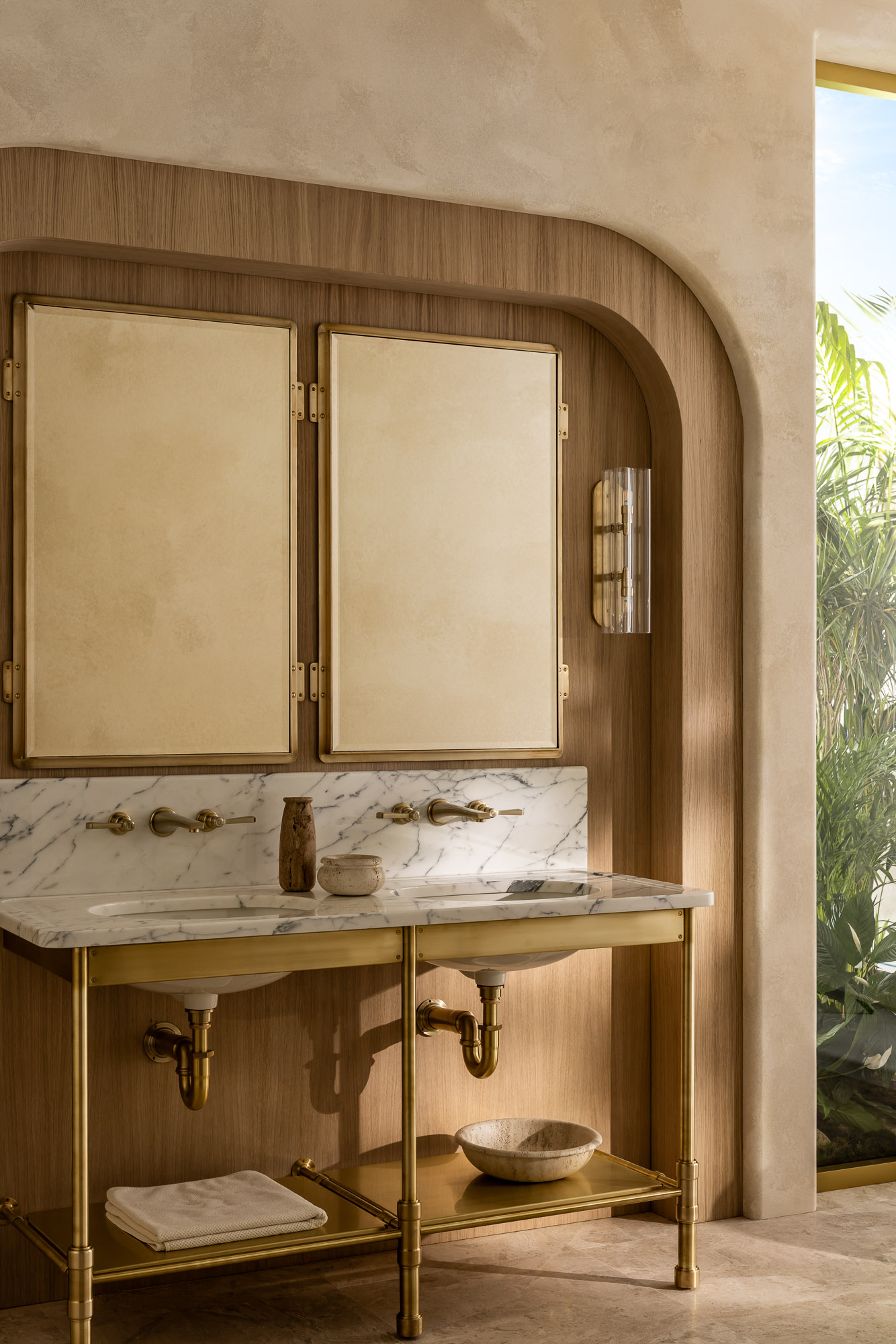
The Hudson Collection for Drummonds was years in the making from initial concepts and sketches to models and prototypes. We sat down with the designers responsible for creating the new solid brass fixture collection, Diego Arias, Alexia Sanchez, and Kat Marquet. Here, the team recounts how the collection came together and the incredible hands-on process it entailed.

How did the collaboration with Drummonds first come about?

Diego Arias: Pembrooke & Ives approached Drummonds with the prospect of designing a collection shortly after the opening of their New York showroom. We knew they had done other design collaborations, and we loved using their products in our projects.

Kat Marquet: We wanted to bring a very New York feel to what is a more traditional English brand. With Andrew’s connection to England and Drummonds’ desire to break into the American market, it felt like a perfect match. We wanted to find elements of connection and bridge this classical sensibility with a contemporary New York audience.

Where did you find inspiration at the start of the design process?

Alexia Sanchez: We tried to focus on concepts that went beyond conventional plumbing fixtures because we wanted to create something innovative and distinct.
Diego Arias: We looked for images, both related and unrelated to plumbing fixtures, to inspire us object-wise and mood-wise.
Kat Marquet: I was inspired by turn-of-the-century objects and domestic products. A man’s straight razor designed during the Art Deco period, for example. Practical in daily use, yet so elegant and of its period to fit seamlessly in a Drummonds space. Ultimately, we need pieces that rotate and move. Drummonds’ work has that Gilded Age faceted aesthetic; you can see where an element would functionally turn and shift. We endeavored to find seamless ways of achieving that ball-in-socket effect.
What specific objects, themes, and visuals inspired the collection?
Alexia Sanchez: We studied a lot of the existing Drummonds’ collections, as well as many other brands we typically use in our projects, but it was really important to us to think outside the box. We looked at car designs, utensil designs, and even elements in nature. We knew we were not reinventing the wheel, but wanted to figure out ways to identify and incorporate subtle design cues we admired in our daily lives.

Can you tell us about the early stages of the design process?
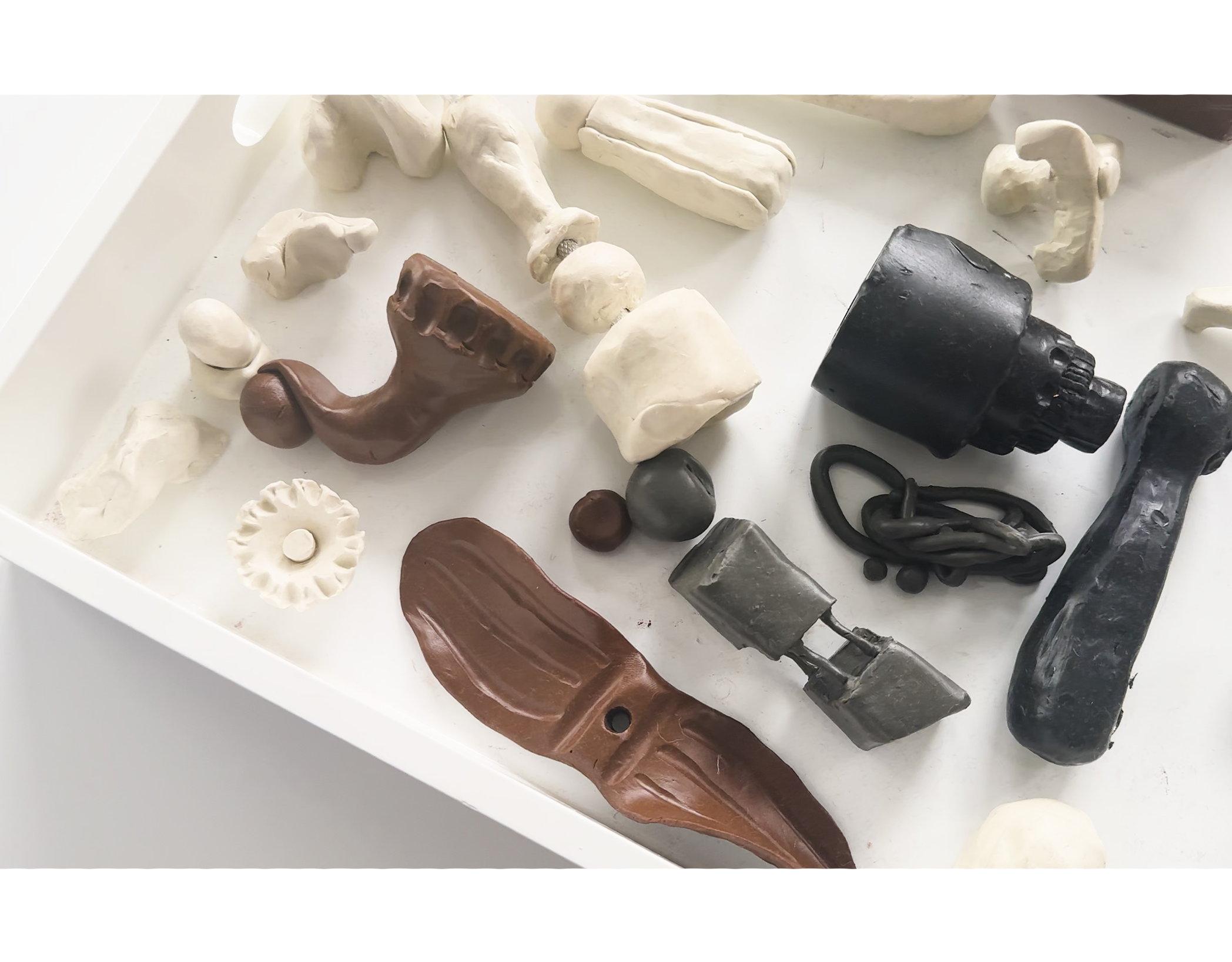
Diego Arias: We just wanted to have fun without specific shapes in mind. We were molding the clay with our hands, trying to see which shapes felt nice to the touch. We weren’t focused on whether something was a bathroom fixture or a functional device. So, some of the shapes didn’t really make sense, but it was really about the impression our fingers made in the clay. Then we explored how that translates into something functional, and what feels comfortable and ergonomic.
How did you translate the ideas from clay to hand-sketches and CAD drawings? What was the next step?
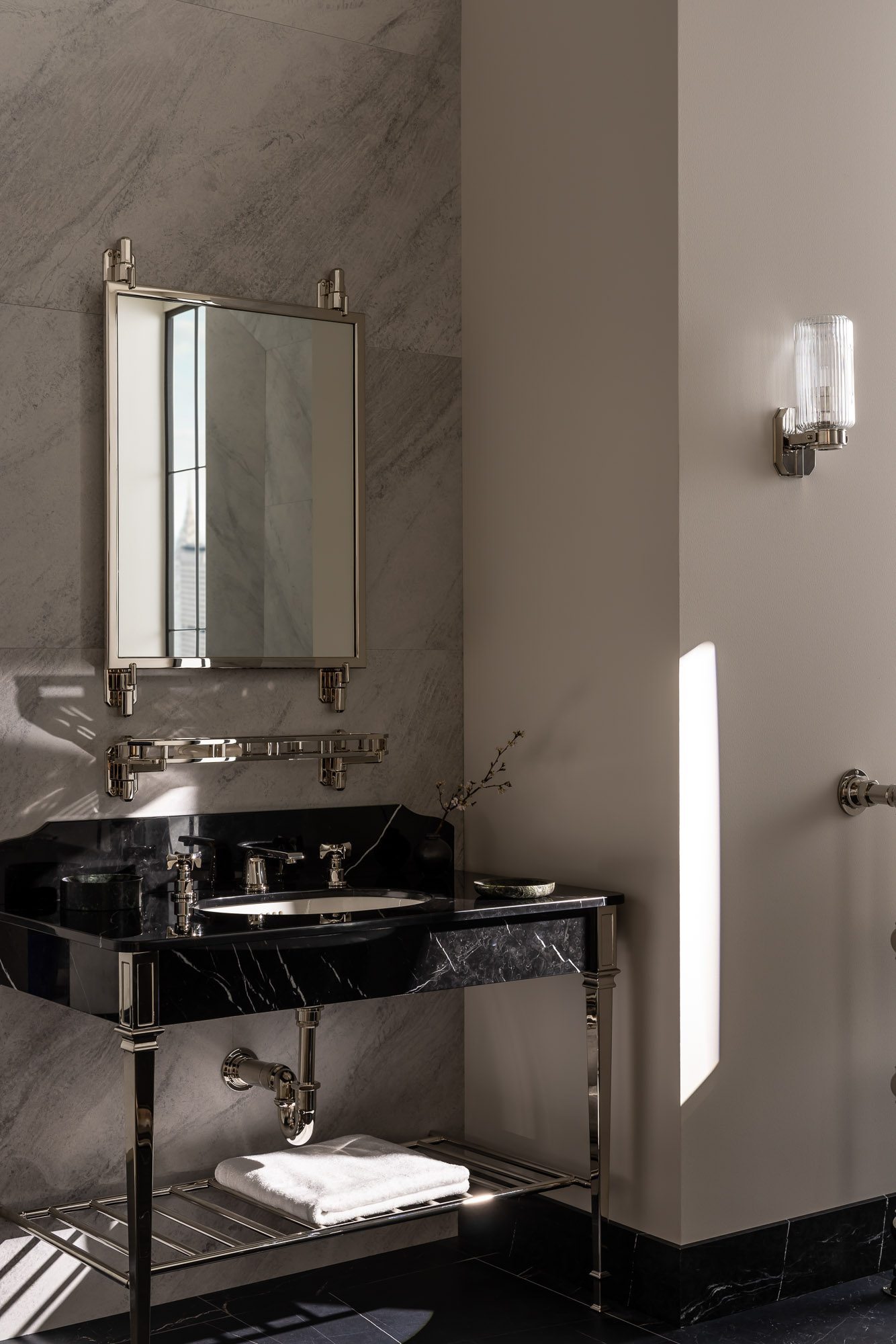
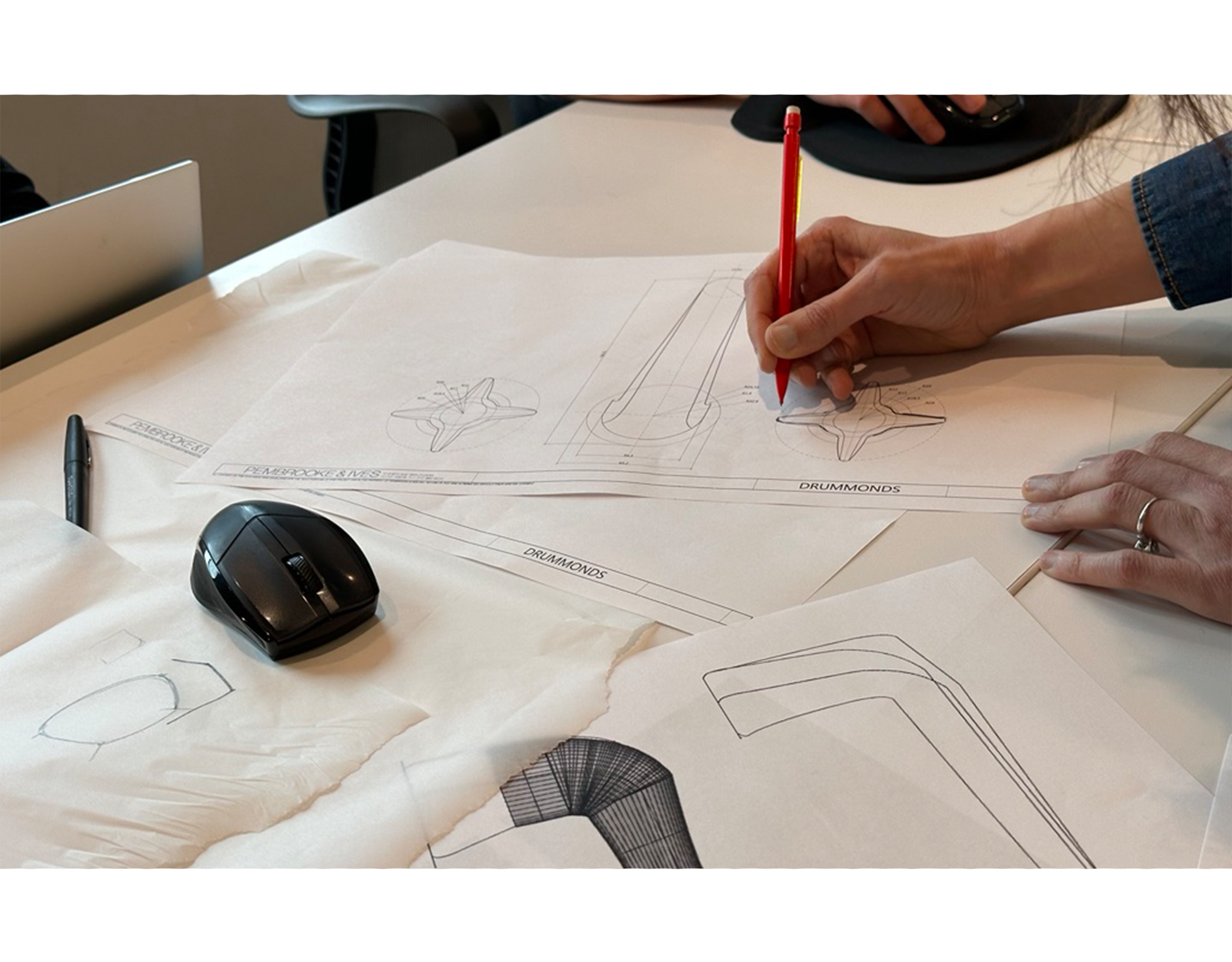
Diego Arias: We went to the Drummonds showroom in the A&D building to feel all the fixtures and measure them. Just the scale itself is very appealing; it doesn’t feel cheap, small, or mass-produced. Understanding that, because we’re dealing with curves and fluid forms, the hand plays a big part. If we had sketched it on the computer initially, it would have taken us forever and wouldn’t have had that hand-crafted feel, so we spent a lot of time sketching and just trying to figure out how it would be geometrically resolved.
Kat Marquet: There is a stream of consciousness in hand sketching that you do not experience in CAD. Ideas come out quicker, and sometimes a line you did not mean to draw turns into something better. Some components of the Hudson line started out as little side sketches that were not even asked for at the time.
Alexia Sanchez: We brought our hand sketches into AutoCAD, where we carefully traced and refined each design element. This process allowed us to accurately adjust scale and proportions, helping us achieve a more precise and feasible representation of our original concepts.
What was the most challenging aspect of the design process?
Diego Arias: The CAD drawing was one of the most frustrating parts of the process because we were taking what we had hand-sketched and turning it into real dimensions, then trying to 3D model it, which meant finding the geometric logic of how the shape would work.
We started by making sure the dimensions matched the Drummonds line. There are many precise internal components in the plumbing fixtures, and we needed to ensure that whatever designs we came up with could accommodate those inner workings. We also compared our drawings with plumbing fixtures from other lines to see how the real size of our creation compares with the existing ones.
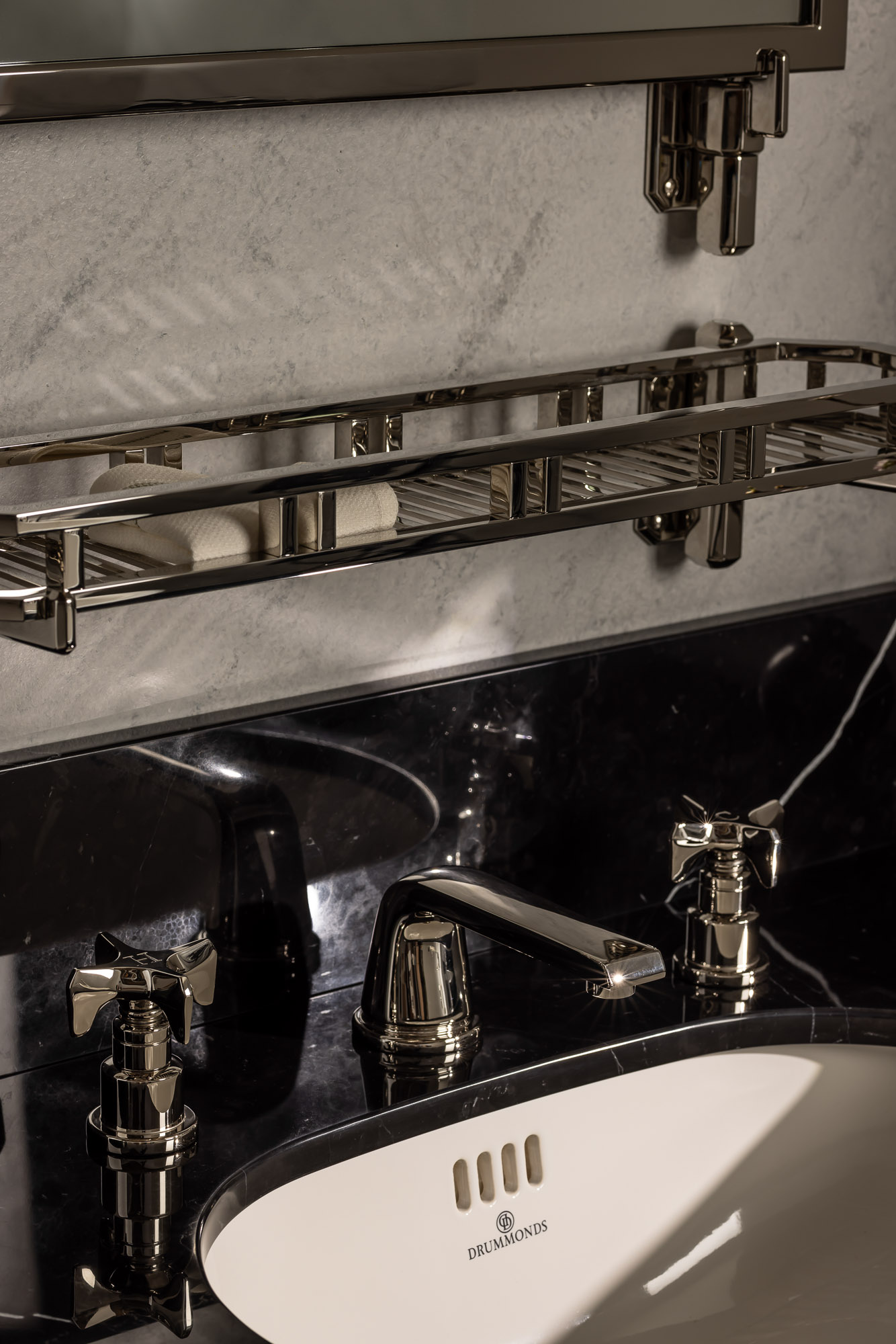
The faucet was very complicated because it’s a circular shape that then turns into a rectangular shape. So how do we model that? We are not simply sculpting it on the 3D drawing; we’re really creating a geometric formula to see how that shape slowly becomes what it is in the end, and what we do on 3D, we really have to figure out all the details. So, when we see the fixture from all angles, we have to make sure that it looks good. So that was also very challenging.
Kat Marquet: Once it really starts to expand, you have to start thinking about it in all three dimensions and full-scale hand sketches—How do things proportionately work? Where does each piece lie so that when you look at it, regardless of the angle, you still have all these little special details involved? The Drummonds team is great at getting into the details to make sure every single little notch, ridge, and reveal is ultimately captured in their product.
How did you approach creating a cohesive series of bath fittings?
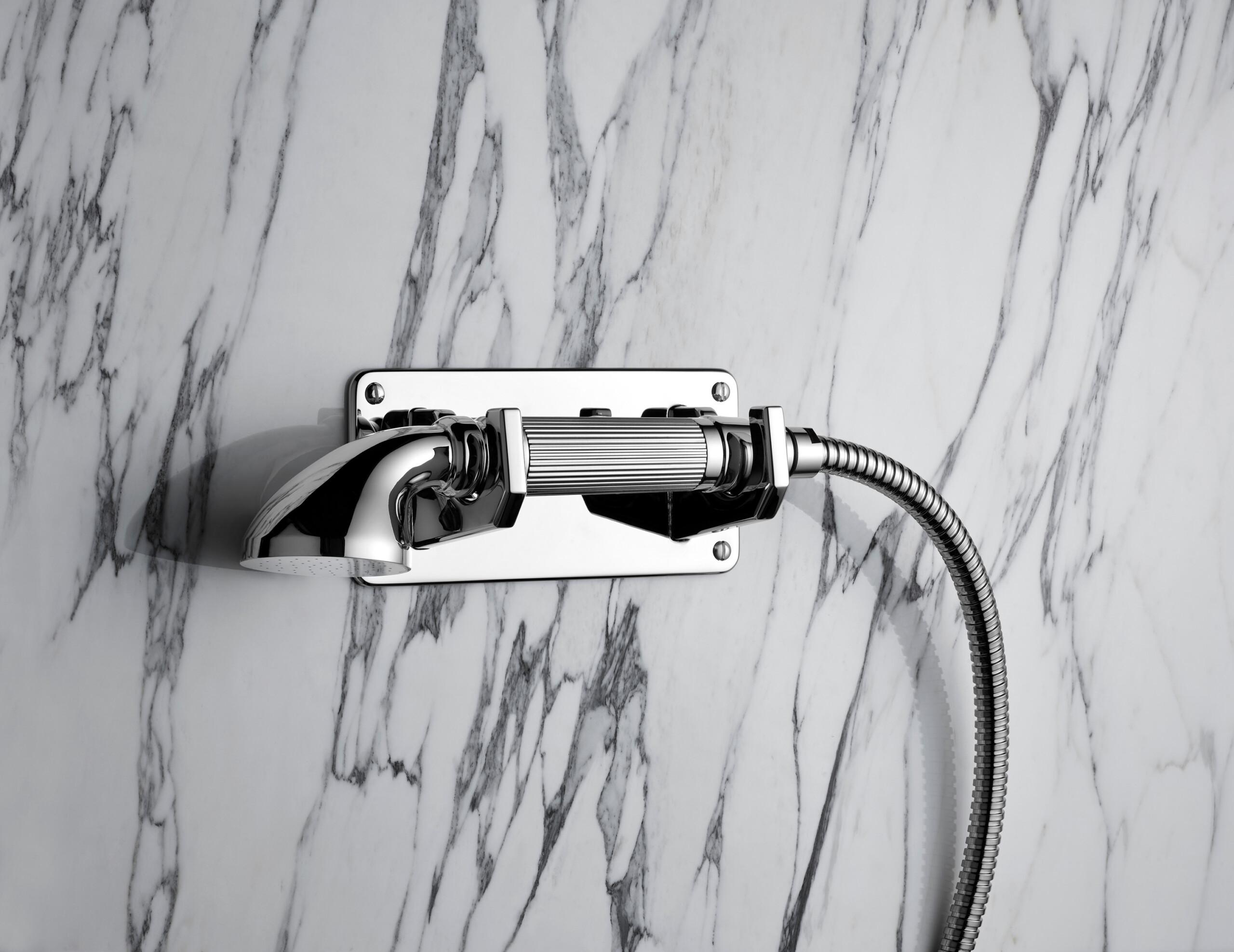
Kat Marquet: A comparison I can draw from my fashion background is that when you have a collection, there is an understanding that there is no such thing as a single defining piece. One object might become the original inspirational design that we continue to reference, but in the end, it must function as a whole family. It has cousins, siblings, and parents that all need to exist together naturally. The faucet and levers need to work in a sink, a tub, or a shower, and so on. Furthermore, the Pembrooke & Ives collection must work in the Drummonds family.
Alexia Sanchez: Much like in residential design, we recognize the importance of maintaining consistency and continuity across distinct spaces. This perspective informed our approach to the collection. Through the deliberate repetition of key design elements—such as a 1/8″ step detail or a shared radial curve—we created a unifying language that subtly connects each piece back to a common design intent.
Can you tell us about the cross-handle design?
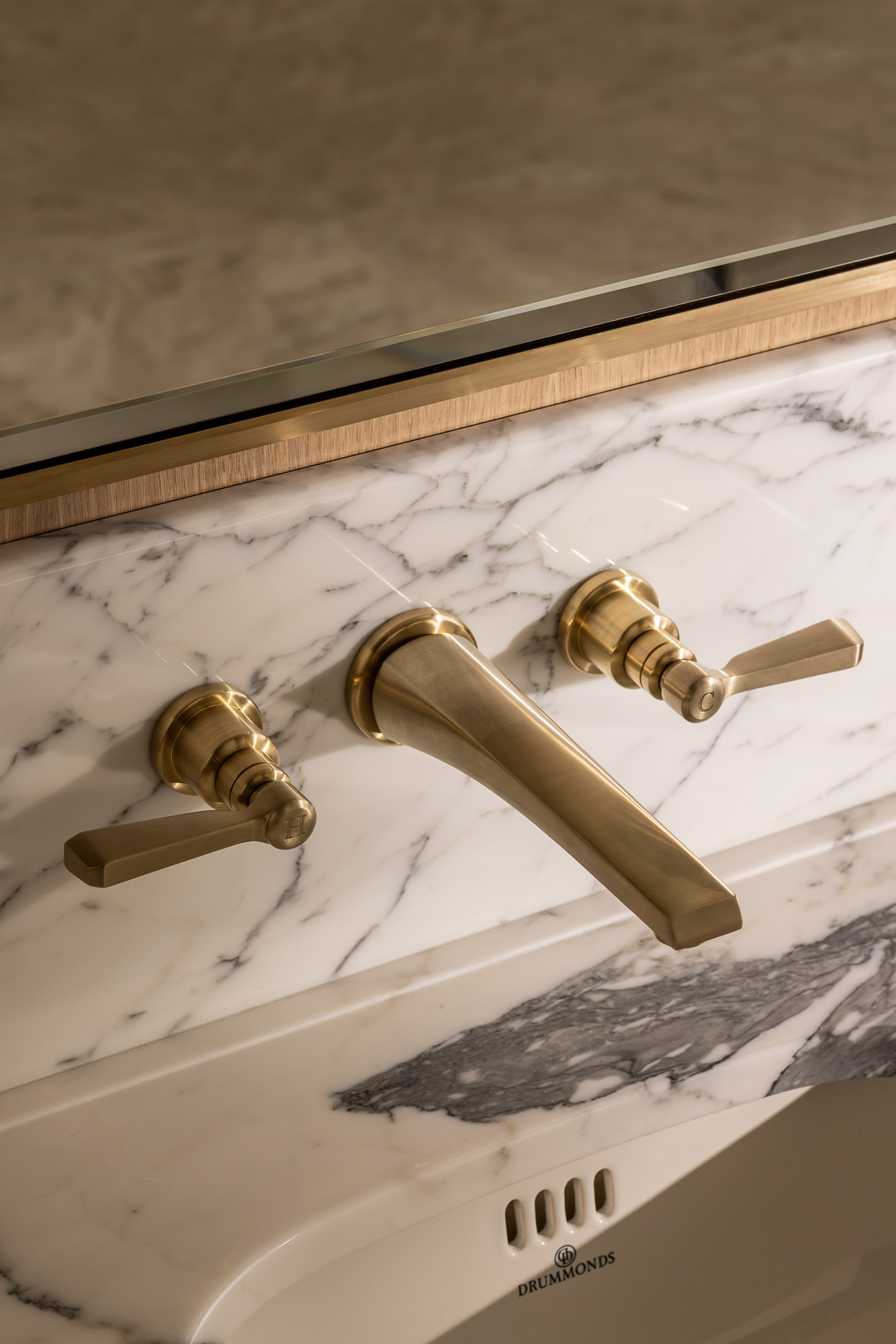
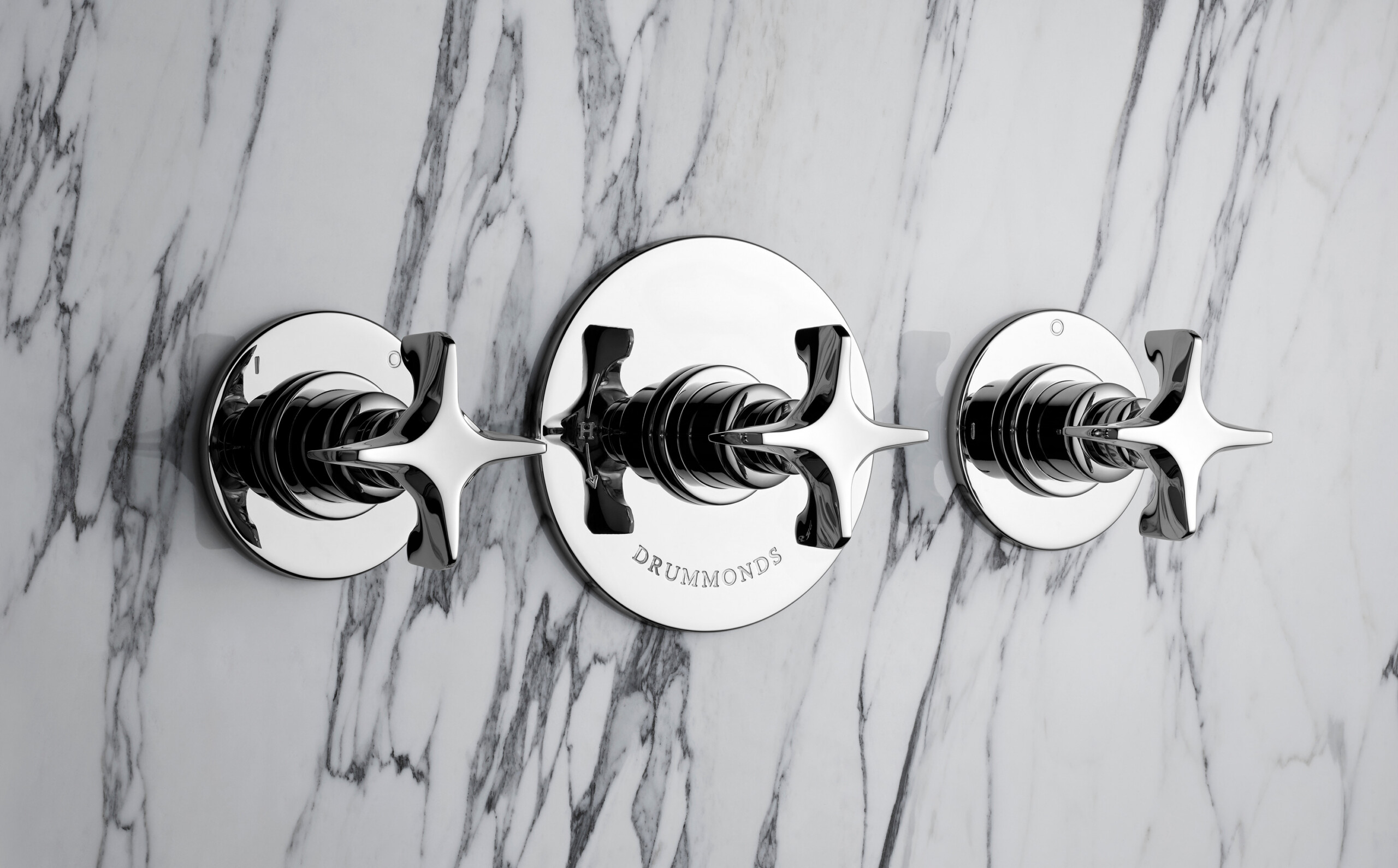
Alexia Sanchez: Cross handles are often associated with a more traditional aesthetic, and we really wanted to reimagine this in a more contemporary/modern way. One of our inspirations was actually elephant ears – their gentle curvature and the way they fan out and droop down as they move. With this idea in mind, we incorporated irregular, flowing curves and subtle points that would expand or narrow to create a softer, more sculptural design.
What are some of your favorite details in the collection?
Diego Arias: Kat did a great job coming up with these really subtle solutions. The profile, for example, has a little return or radius, or even the detail of the stop, which is chamfered—it makes you think it was chiseled or carved, and if you had used a computer, it would just be straight, so the hand really finessed the details.

What has been the most fulfilling aspect of working on the product line?
Kat Marquet: For me, coming up with the concept and the freedom in the hand sketch is always my favorite. But then you have these brilliant artisans from the Drummonds team, all they do, day in, day out, is craft these molds that will eventually become a full-cast bronze object. When a physical thing in the real world shows up on your desk after months of sending designs back and forth, it’s magical.
Alexia Sanchez: The most fulfilling aspect of product design is actually being able to use the product and experience firsthand how all the considerations of functionality and aesthetic design came together to create a successful product. Although the average person may not know all that we’ve put into designing this product, they will definitely feel it.
Where can we find the Hudson Collection in-person?
The Hudson Collection is now installed at the Drummonds showroom in the A&D building in New York City.