Meet the Maker: Dominick Leuci
Dominick Leuci is a Brooklyn-based sculptor and painter whose practice is rooted in the interplay of light, color, and material. A graduate of Parsons School of Design, Leuci works from his studio in DUMBO, creating large-scale light sculptures alongside an equally evocative body of abstract paintings, two bodies of work that speak the same visual language. His sculptural lighting works have been shown internationally at Design Miami/Basel, Salon Art & Design/NY, Collectible/Brussels, and PAD Design Art/London. We spoke with Dominick Leuci in an exclusive interview about his beginnings, artistic inspirations, and the commission in the entry gallery of our Elegance on Fifth project.
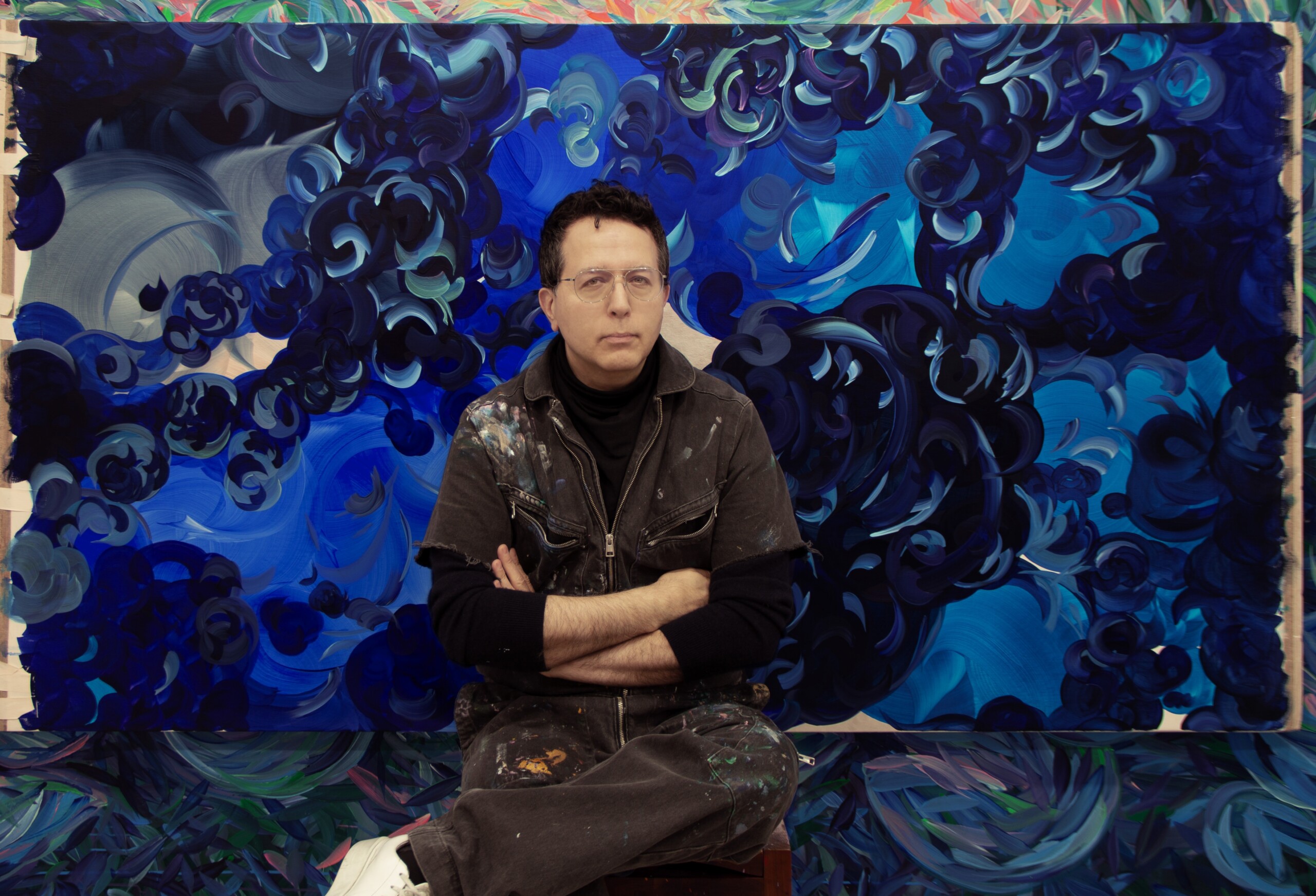
Tell us about the beginning of your artistic practice. How did you get started?
When I opened my studio ten years ago, I set my intention to create mystery and wonder. Whether it be sculpture or painting, I explored materials and techniques to express my own vision and creativity.
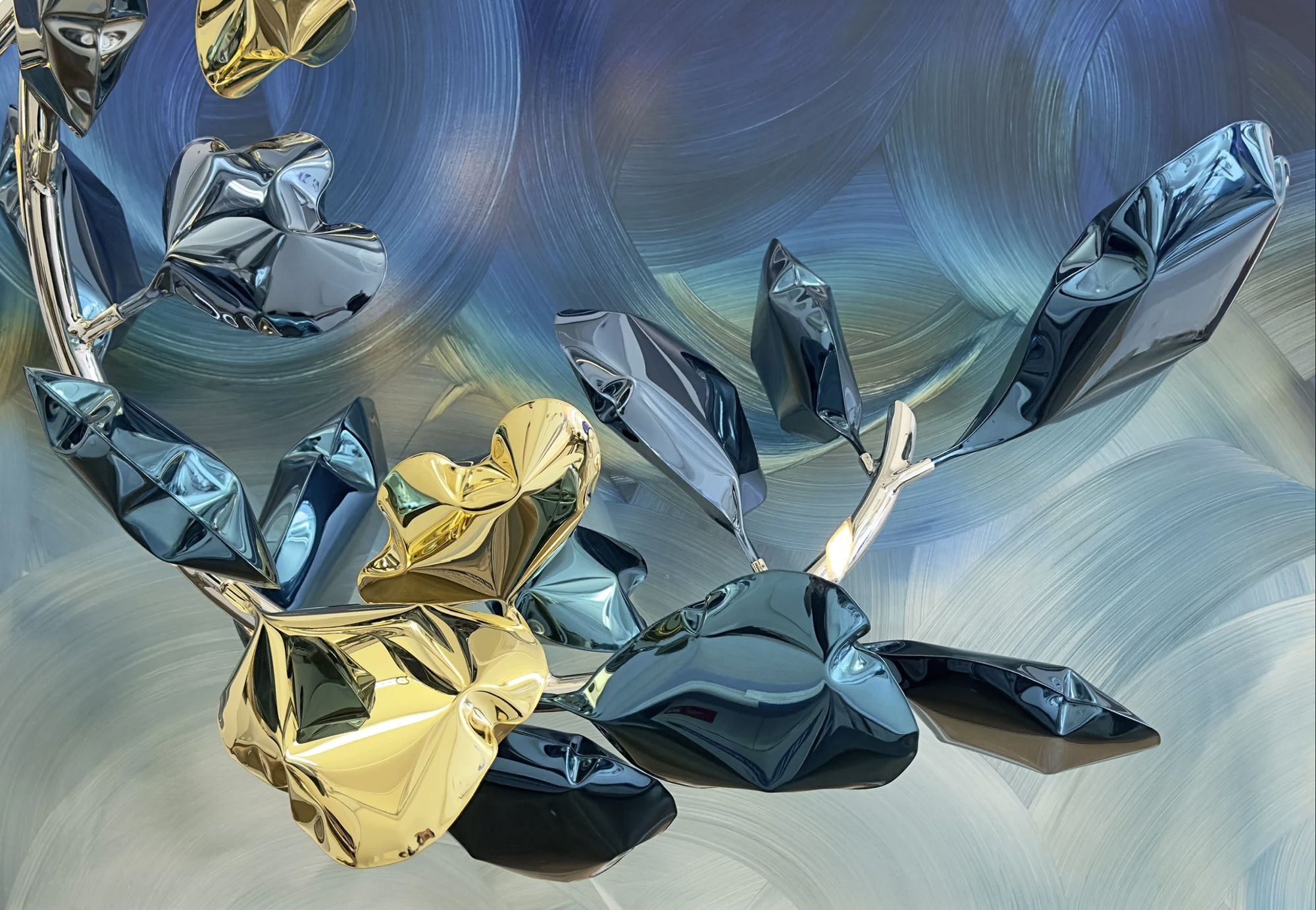
You describe your work as “Romodernism.” Can you share what this means to you?
‘Romodnernism’ is a fantasy era I made up to be purposefully out of step with traditionally assigned canons. For me to express both my romantic and modernist nature, I needed to craft my own story with an imagined lens on how to view the world of art and design. By approaching my work from two very different eras, I created my own signature that is not in step with time itself. From this unique perspective, I built a viewpoint that would allow my work to sit in both contemporary and traditional settings…Which it has!
Who or what are your greatest artistic influences?
My influences vary from Arte Nouveau, Romanticism, Impressionism, Modernism and include: Jeff Koons (reflection is the proof of existence); Claude Monet (impressionism as the forebearers of abstract expressionism – when painting ‘fell apart’); Anish Kapoor (confounding perception); Alexander Calder (the joy of mobiles and their positive/negative forms); Jean Arp (organic nature); Jim Hodges (how color and reflection subvert their form).
How did the “Eques” series come to be?
I had a general notion in my head of what I did not want to make…so that helped me look elsewhere…and what better place than Mother Nature! I knew I wanted it to have a feeling of flora, but not entirely. With research, I came across the Leafy Seadragon (Eques Phycodurus) which has both a flora and fauna form. Found only in the south-western shores of Australia, it has evolved over time to appear like seaweed, which has helped it avoid natural predators. How mysterious!
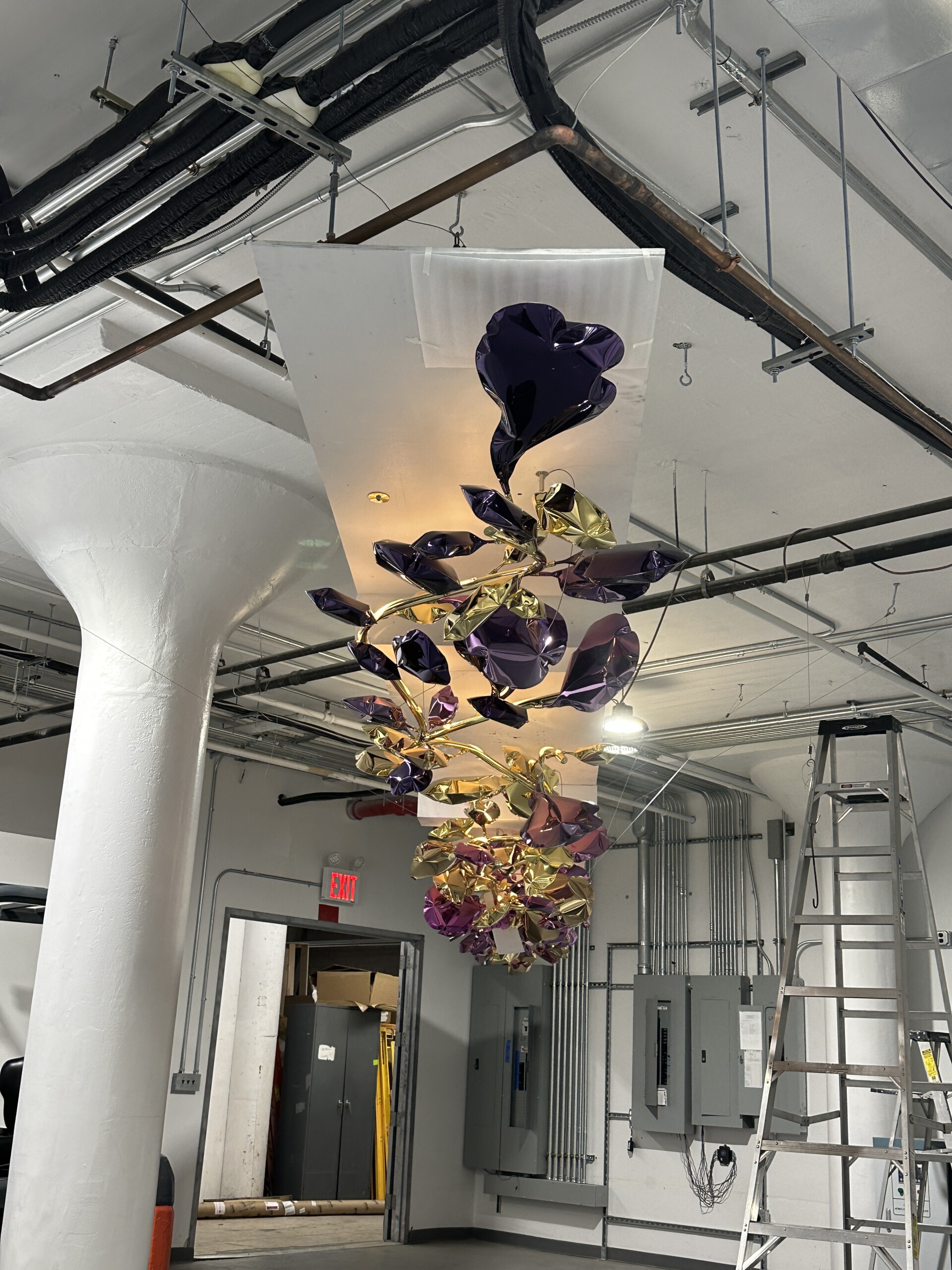
My LED lighting is embedded within the branch system, giving it a sleek and futuristic appearance. When unlit, the LEDs almost disappear and take on the appearance of metal. This design feature inverts centuries of chandelier design, whereby the illumination comes from within the support structure.
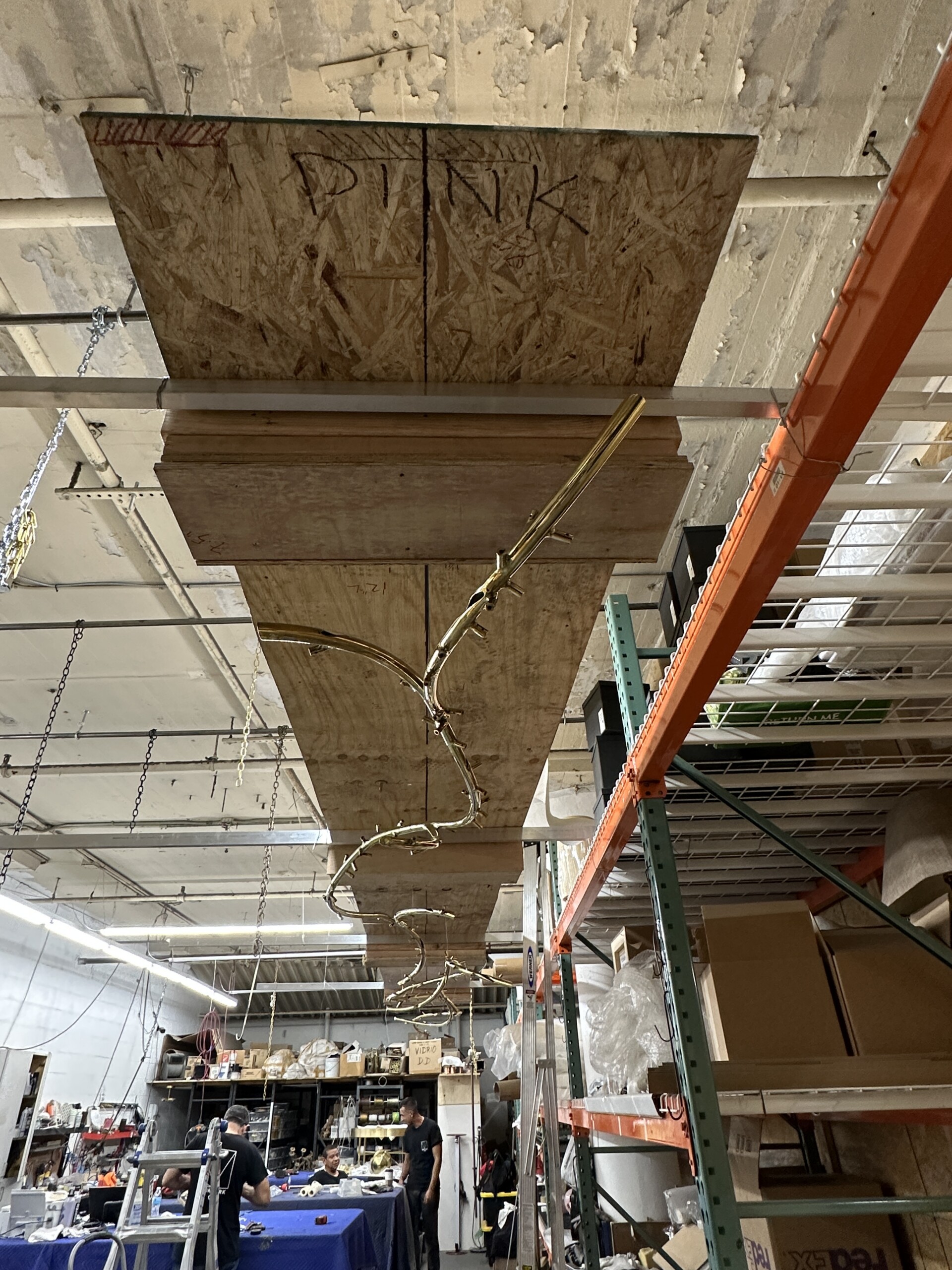
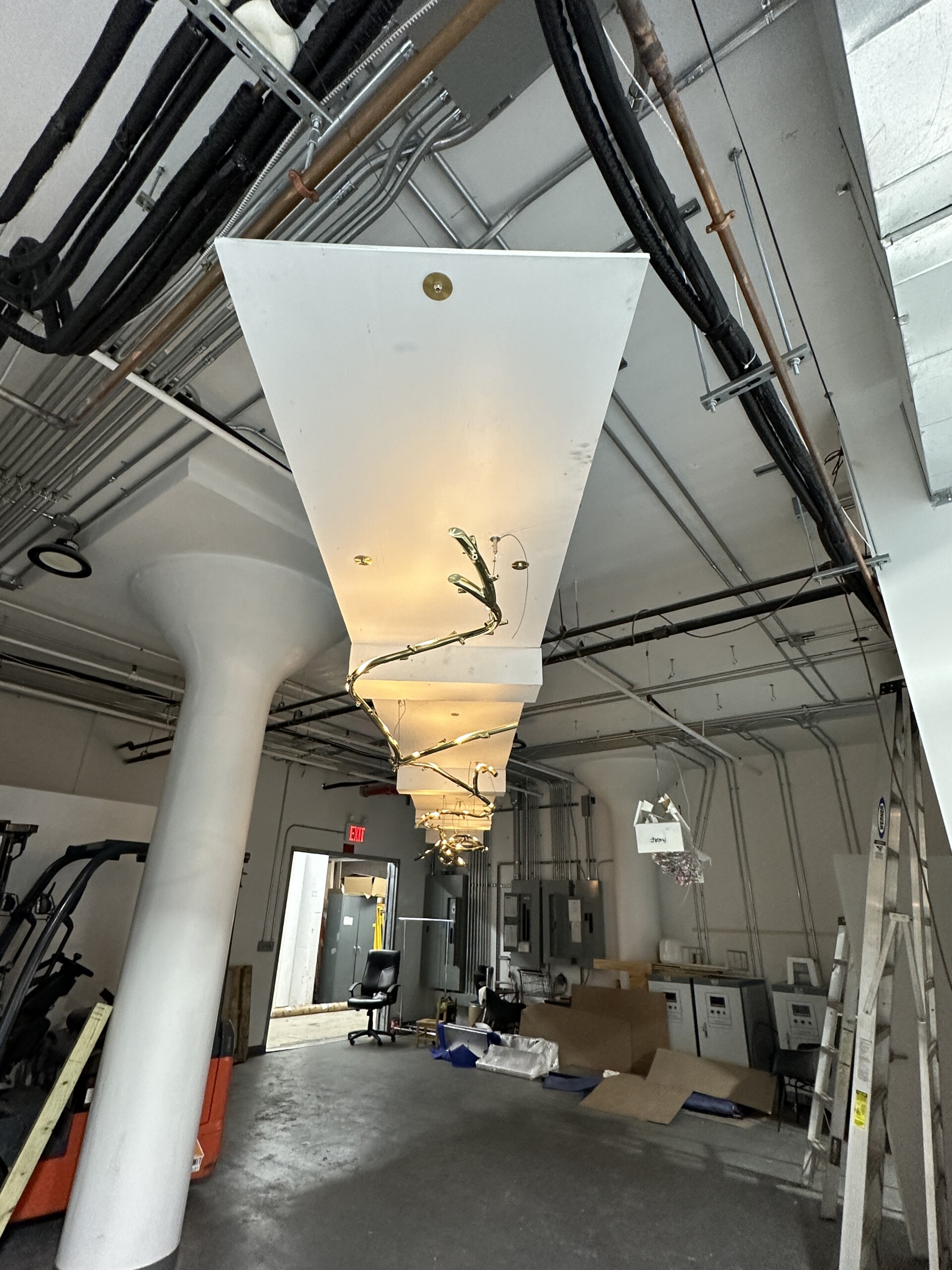
Can you walk us through the process of creating light sculptures?
The first step is to understand the space. As all my work is bespoke, I need to learn and understand what the collector of my work is hoping to feel. Is it airy and light? Do they want dramatic and bold?
From there, the next steps include hand sketching for feeling, then making a quarter-scale maquette to understand the balance and form (much like Calder, my suspended works are like mobiles as they have a buoyant balance coming from the forms themselves); then a realistic drawing is rendered to scale in Photoshop. I do not use 3D software as my works are like complex spirals. I need to see and understand the work in real life before producing an actual work.
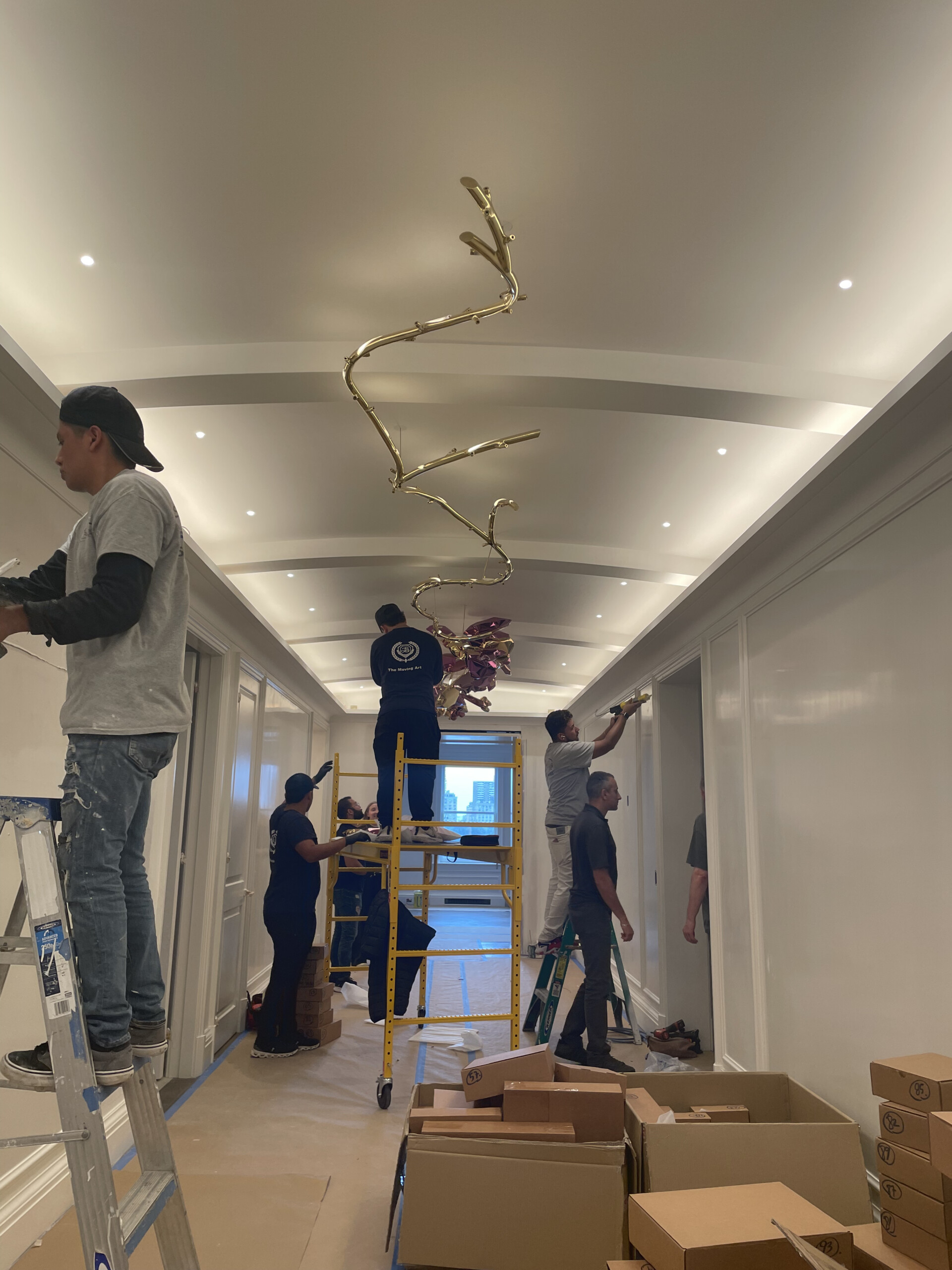
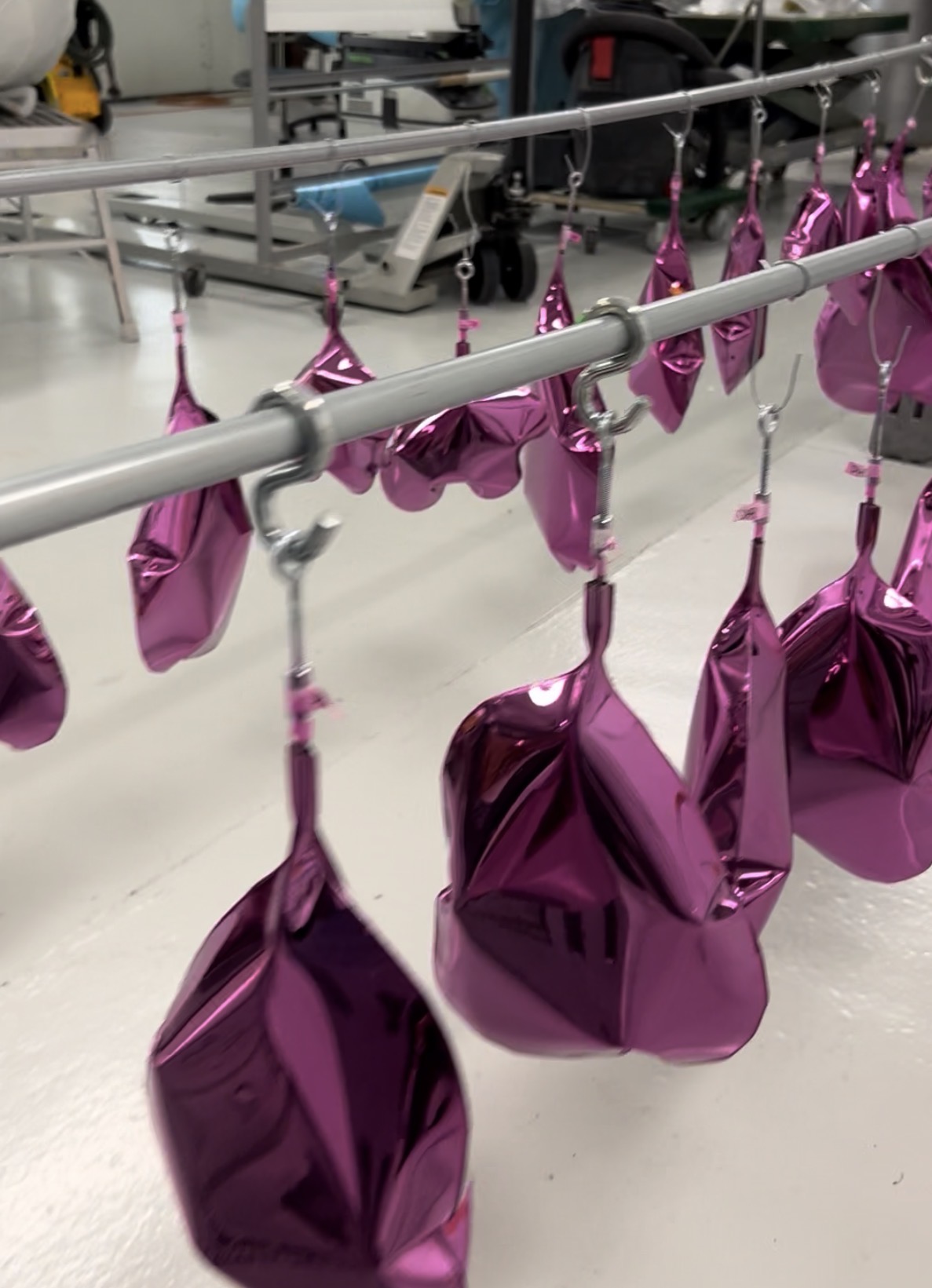
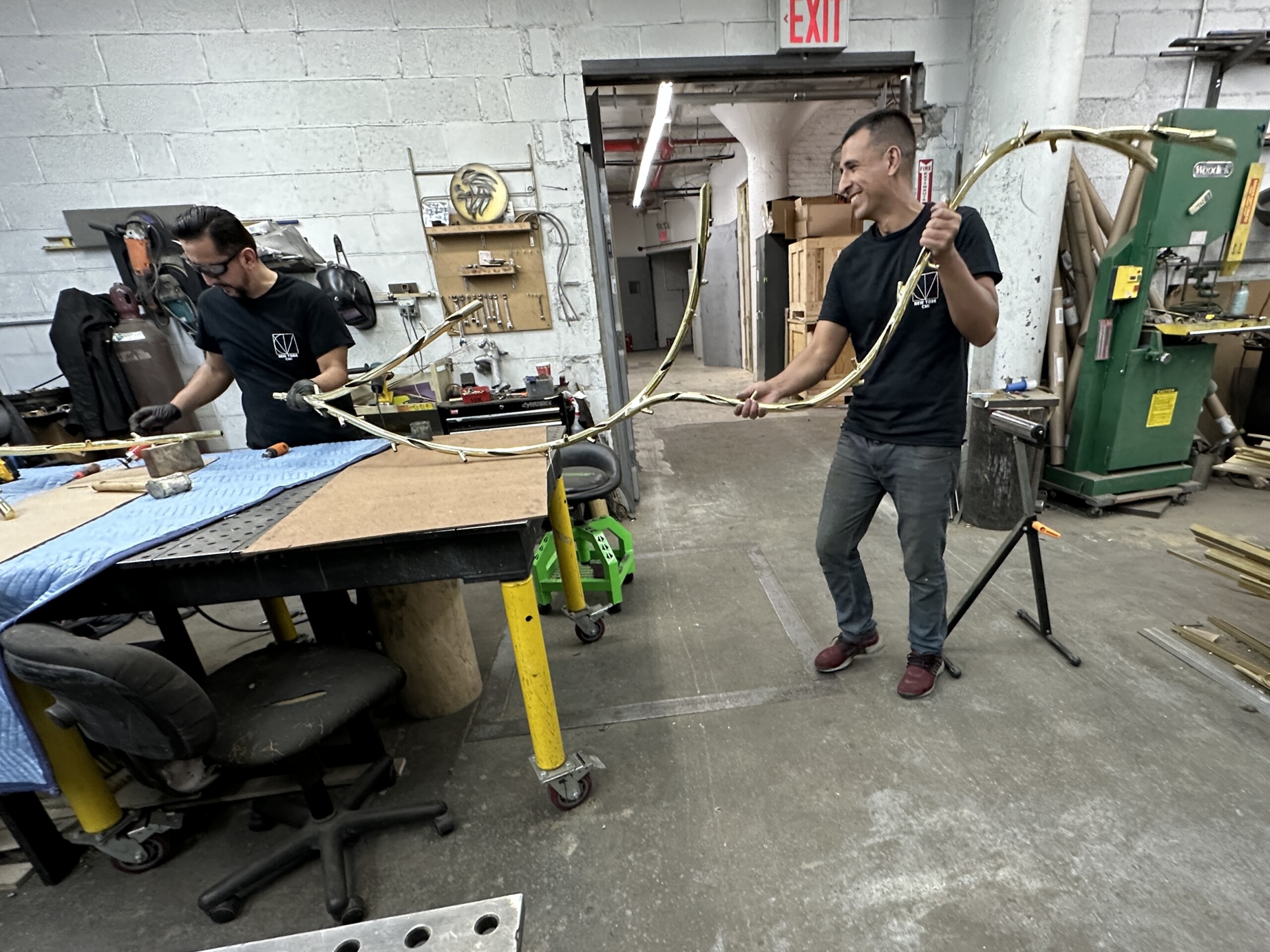
Once the design is given the go ahead, it’s time to bend, weld, blow, paint, and transfer it from maquette to actual form. This transferring step is done one measure at a time, which requires checking the structural forms and placements of my sculptural elements that I call ‘plumes’. I’ve been working for a decade with the same team, who are all experienced artisans and craftspeople, that help bring my work to life.
Can you explain the role materiality and color play in your work?
Color is life. Life is color. Literally and figuratively, all vibration, frequency, and energy is color. I could not design without it. My sculptures have the impact of reflecting the surrounding color and their environment. My approach in creating is to try and give the impression of material metamorphoses. Can metal appear like glass? Can paint illuminate from my technique of painting?
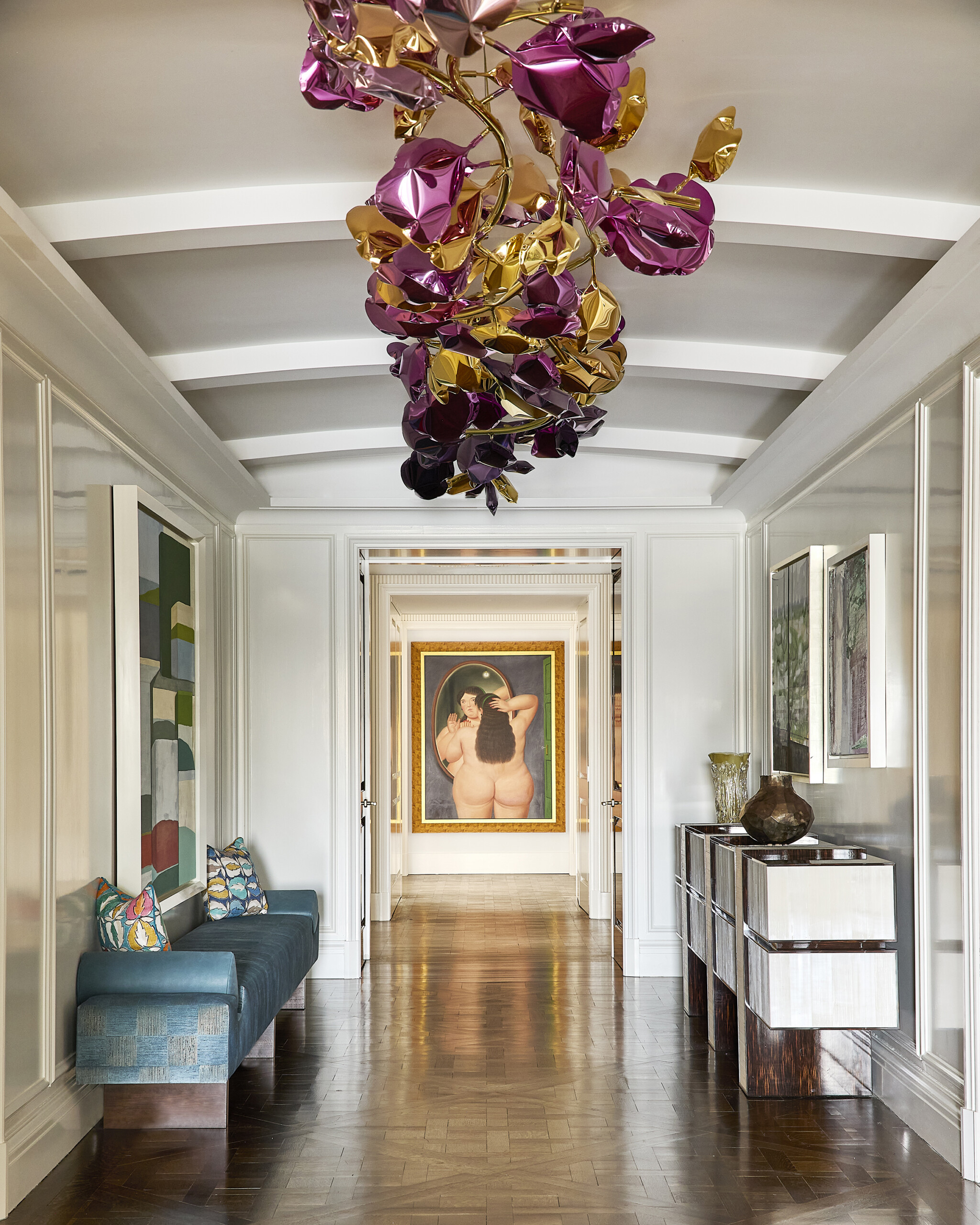
What was the directive for the custom sculpture in this project?
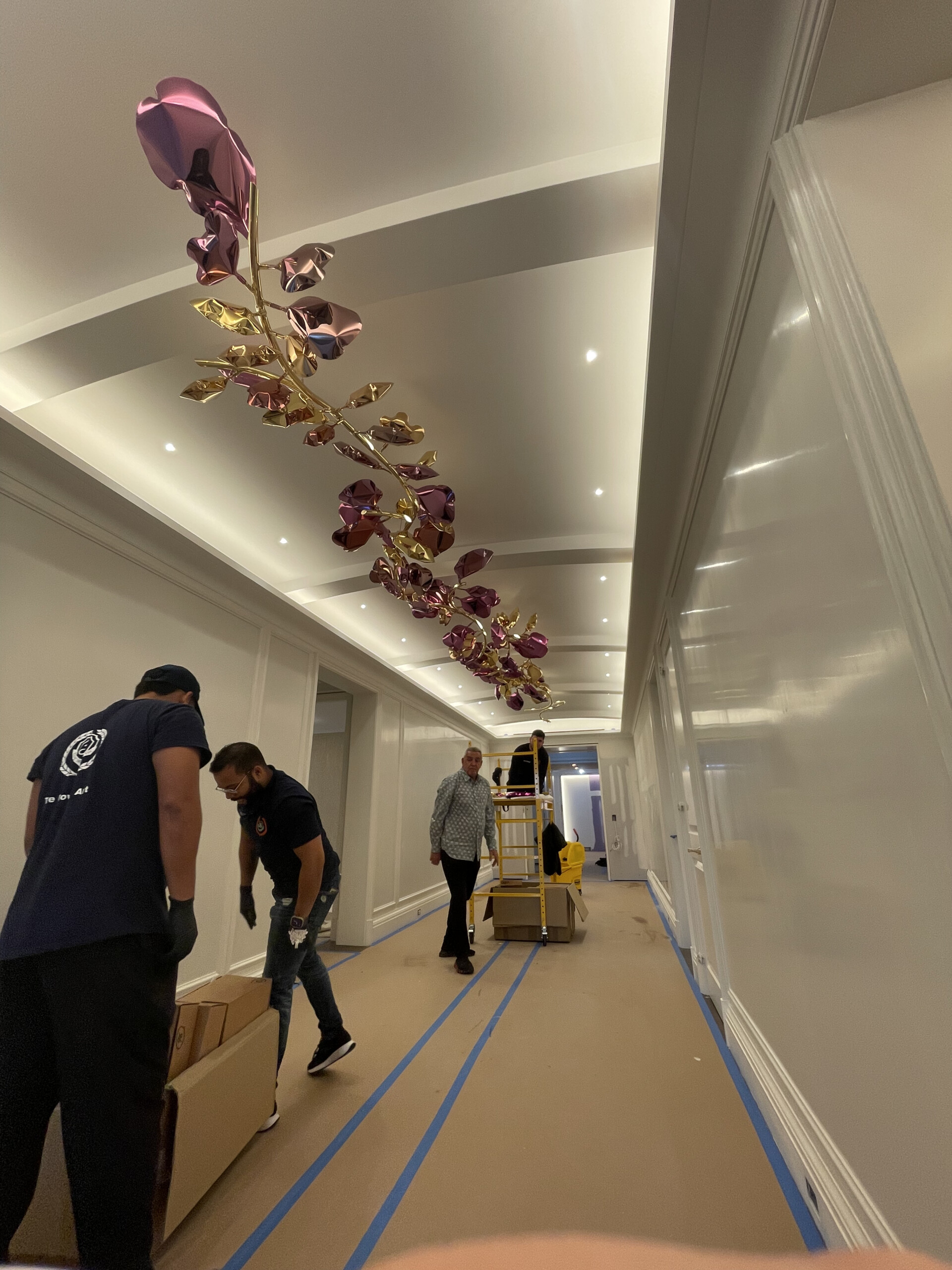
To create an exceptionally narrow and long piece that would evoke movement. The dimensions of the sculpture needed to be about 30 feet long and only 30 inches wide, with a variety of pale to deep pinks, violets, and plums sprinkled with gold and rose gold.
How did the architecture of the entry gallery inform the piece?
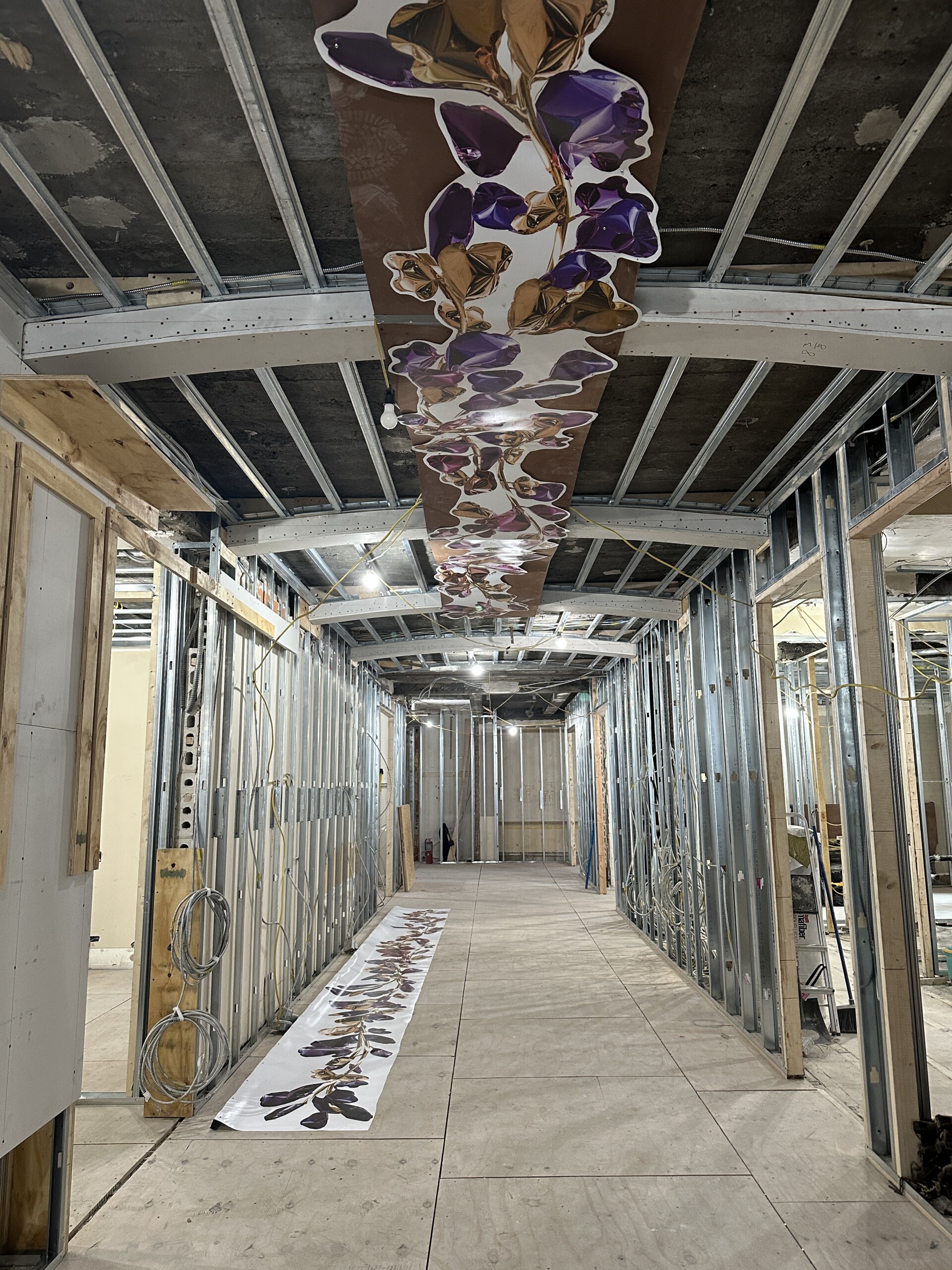
The hallway had a coved ceiling, so we wanted to hug the ceiling as much as possible, so as not to take away from the height of the hallway. The idea of a meandering vine seemed like the right solution…for it to be elegant and wavy. This is most noticeable when viewed from underneath.
What was the collaborative process with the Pembrooke & Ives team like?
The process was very guided and methodical, allowing me to design and create within the spatial parameters of this entry hall. I appreciated the design feedback as it gave a second eye that allowed the work to evolve in form.
What were some challenges you faced?
This challenged me to think of creative ways to make a long and continuous form in appearance that needed to be made in sections for transportation and installation.
What is the most rewarding part of what you do?
It’s both working with a great team and hearing back when a client is happy with the joy my piece brings into their home.
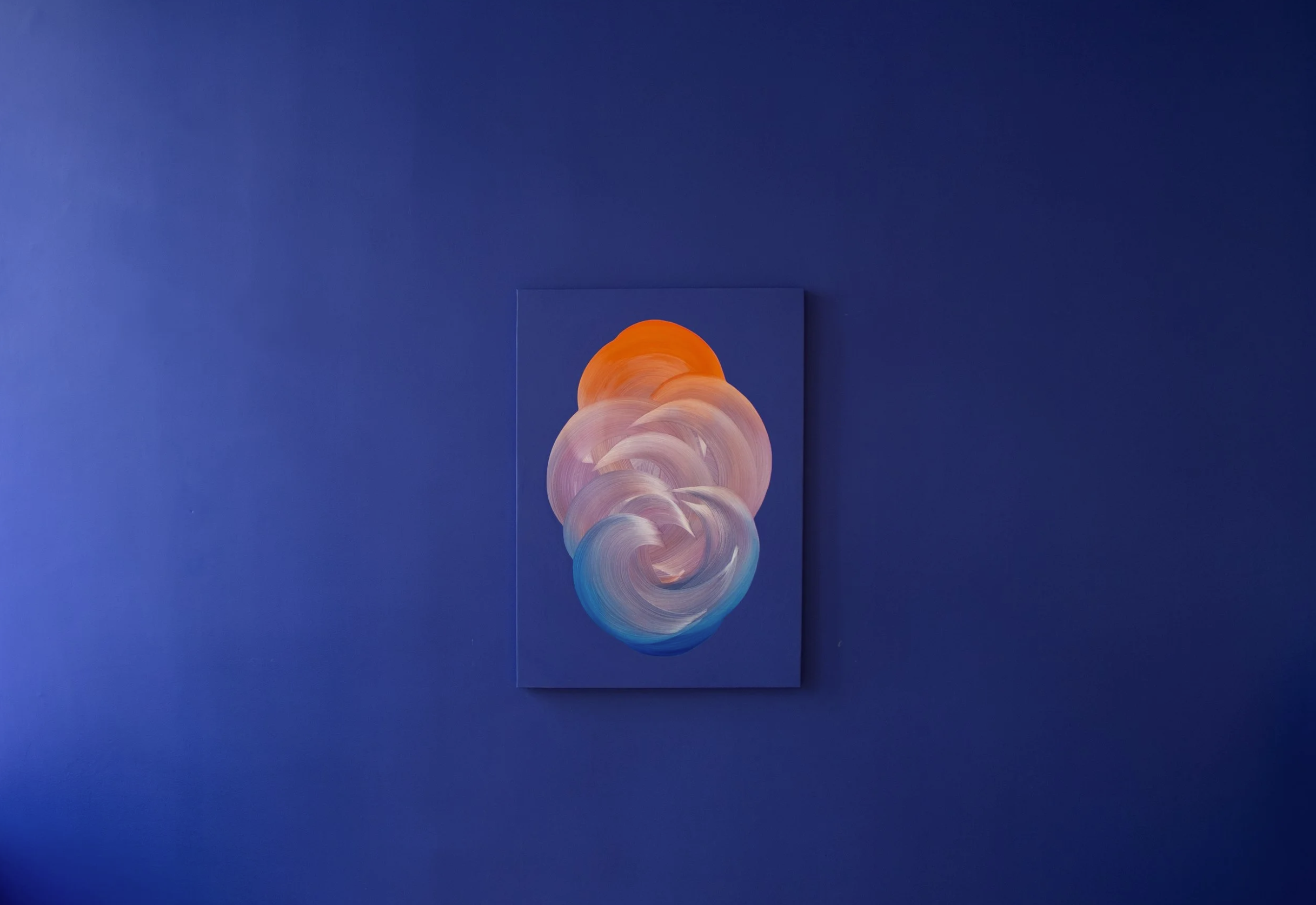
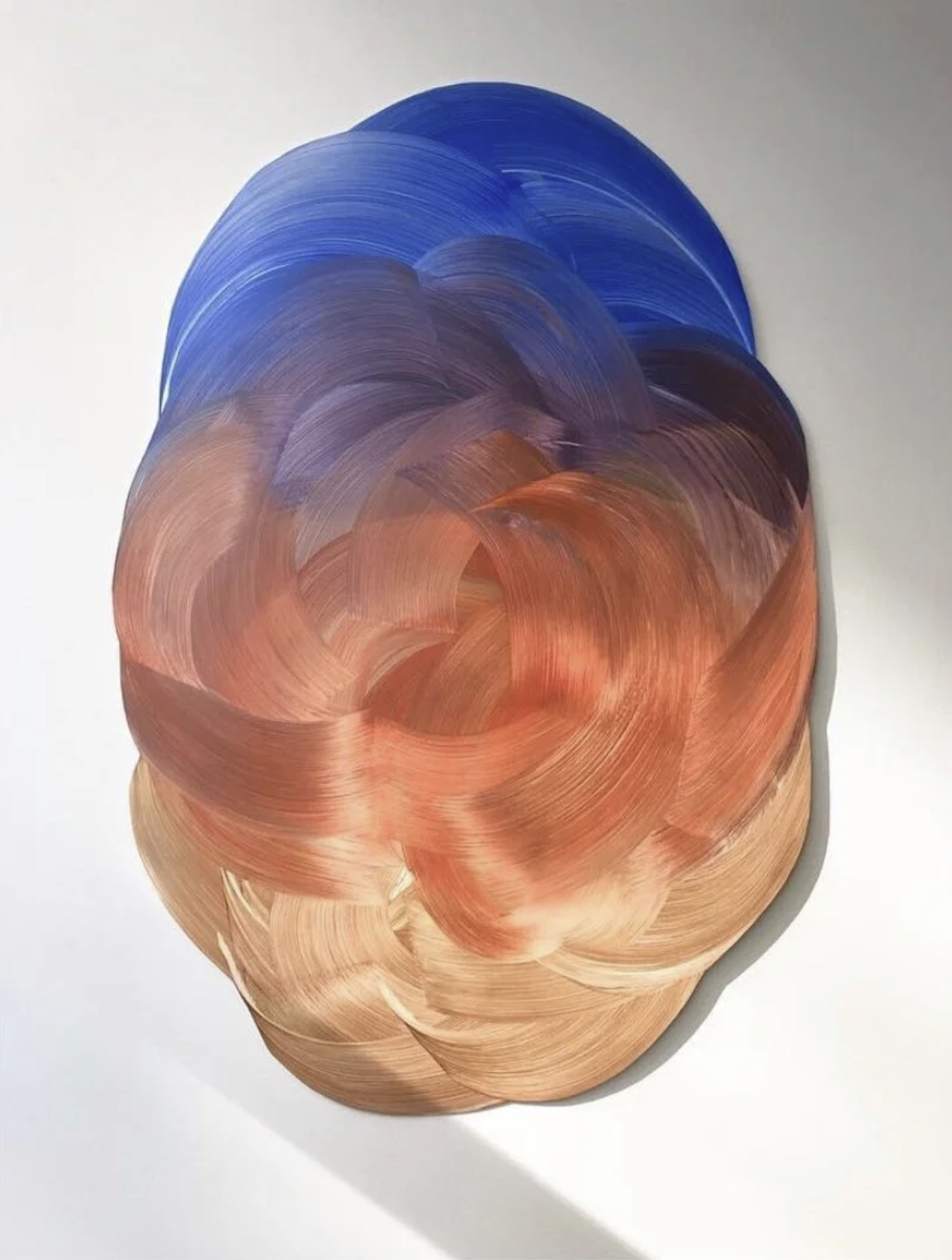
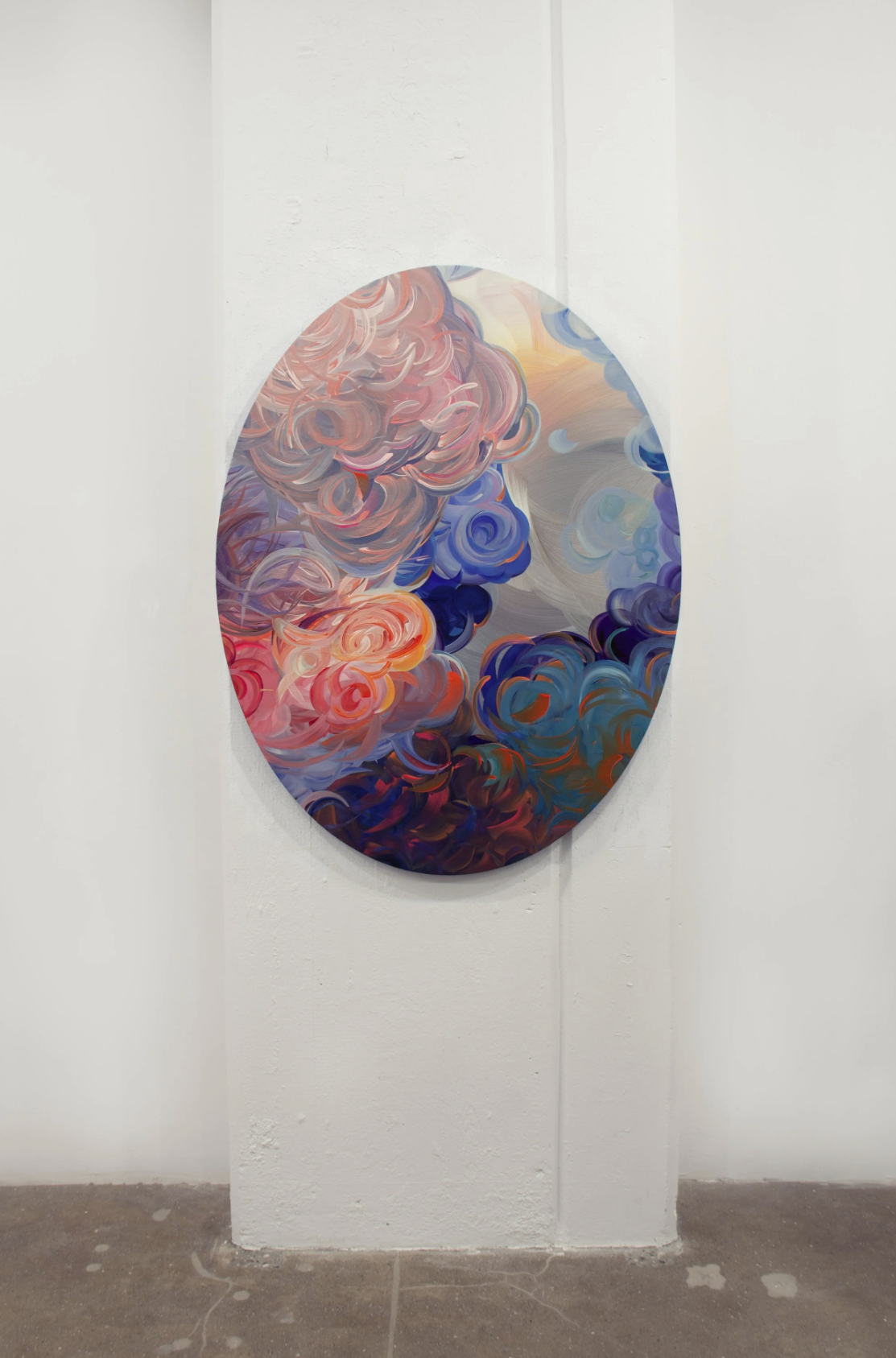

You also create incredible paintings. Can you share how these two media create a cohesive body of work?
There is a synchronicity in my paintings and sculptures as they both act like meditative abstractions on light and color. There lies an intent to be pulled into a dreamy fantasy and find little moments and surprises with how light bends and reacts with color. Combined, my paintings and sculptures create a language that is singular to my vision of ‘romodernism’.
Where can people view or experience your work?
My creative studio is in DUMBO, and I welcome visits by appointment. I always enjoy the dialogue and reactions to my work.
What’s next for you? Is there anything exciting in the works that you would like to share?
I’m working on expanding my Eques series with new finishes and elements. I’m also exploring fiber art with rugs that are based on my paintings.